Tactical Situation Analysis
I identify the key moments in your match where better positioning and court reading would change the outcome. Real patterns from your real game.
Expert tactical analysis for amateur to competitive club players. I break down your situations, decisions and court patterns — and give you clear, practical advice to level up your game.
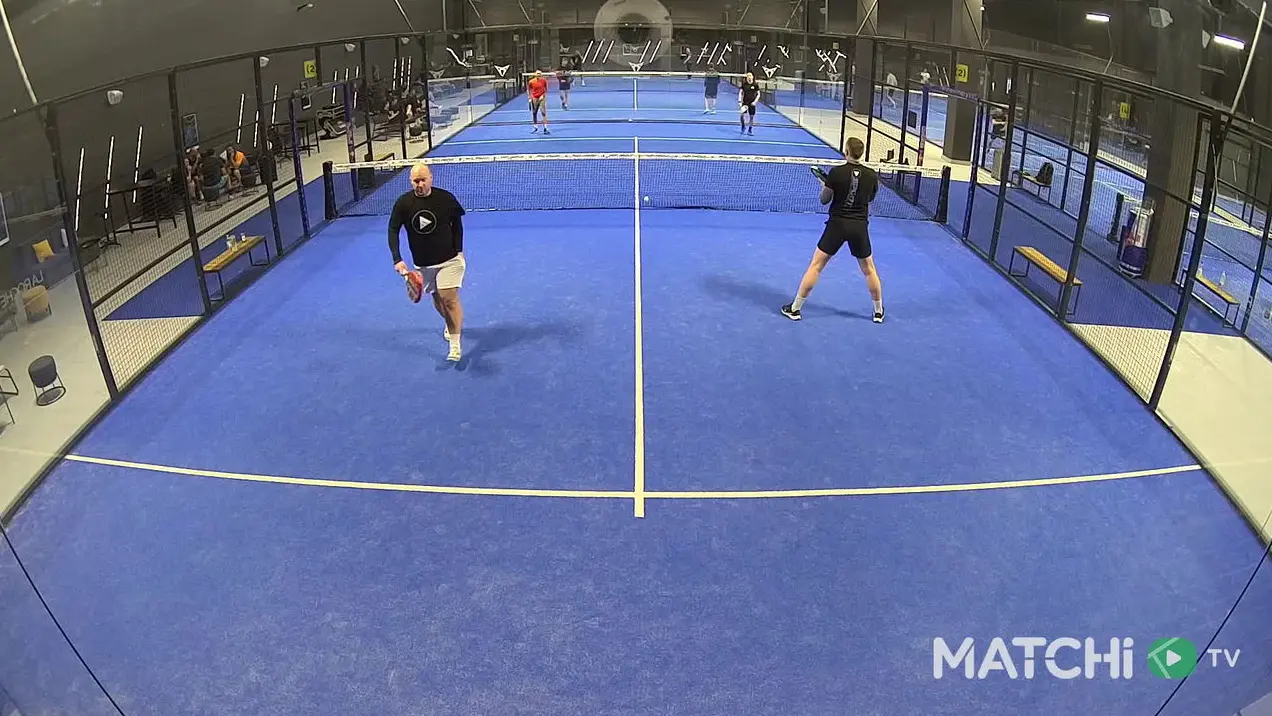
No generic technique tips. I focus on the decisions you make under pressure — where you are, why you're there, and what to do next.
I identify the key moments in your match where better positioning and court reading would change the outcome. Real patterns from your real game.
Understand why certain choices work and others don't — based on your position, your opponent's position, momentum and court geometry. Build your padel IQ.
A clear, structured written report delivered within 48 hours. No jargon — just specific, practical steps you can bring to your very next session on court.
From recording to a report in your inbox — the whole process is designed to be frictionless so you can focus on improving your game.
The original vision for AI Padel Coach is a fully AI-driven analysis tool. The reality is that current AI models aren't yet capable of providing reliable tactical feedback from padel video footage. Rather than ship something inaccurate, I do the analysis myself for now — and I keep testing in the background as the models improve.
Use any device — phone, tablet or a court camera. A fixed-angle view from the back or side works best, but we'll work with what you have.
Log in, upload your video and add a brief note on what you'd like me to focus on — specific situations, a pattern you're unsure about, or just general tactical review.
I watch your video and break down the key tactical moments — court positioning, situation recognition, decision patterns and what to do differently. Delivered within 48 hours.
You get a structured written report with clear observations and specific action points. Read it before your next session and start applying immediately.
A real tactical report breaks down specific situations from your video with clear observations, decision notes and action points.
On several points you attempted to change direction on your first volley after coming to the net following the serve. The return was still low and you were still establishing your position, which made the direction change unnecessarily risky and sometimes resulted in losing the point on the first volley. These volleys were played below net height, so focus on depth (of the volley) to keep the net position after the serve. If you play an easy volley they will be able to lob your partner comfortably. The serve creates an advantage, the first volley should consolidate it.
When you and your partner had net control and were building pressure, you repeatedly tried to switch direction from one corner to the opposite in a single shot — skipping the middle entirely. This opened large diagonal passing lanes and broke your compact net formation. Your opponents were able to counter with passing shots or fast lobs because the sudden angle change left gaps between you and your partner. The pressure you had built over several shots was lost each time.
When pushed into the back corners under pressure, you consistently defaulted to a crosscourt defense even when the attacking team was well positioned at the net waiting on the diagonal. This opened wide angles for them to exploit and pulled both you and your partner out of position. A straight block or lob in these situations would have kept the ball in front of you, limited their response options, and given your pair more time to recover structure.
The right-side opponent consistently produced short, defensive replies when receiving repeated pressure to his backhand — especially off the glass. Despite this, you spread your attacks evenly between both opponents and frequently switched to the left-side player who was handling pressure much more comfortably. By the time you returned to the weaker side, the right-side player had recovered his rhythm. Sustained targeting of that backhand would have generated more short balls and forced his partner to over-cover the middle, opening gaps between them.
Upload a video from a match or training session. Add a short note on what you'd like me to focus on. I'll send you a full tactical report within 48 hours.
Please log in or create an account to submit a video for analysis.
Uploading your video…
Your video has been received. I'll review it and send your tactical report within 48 hours. Check your email for updates.
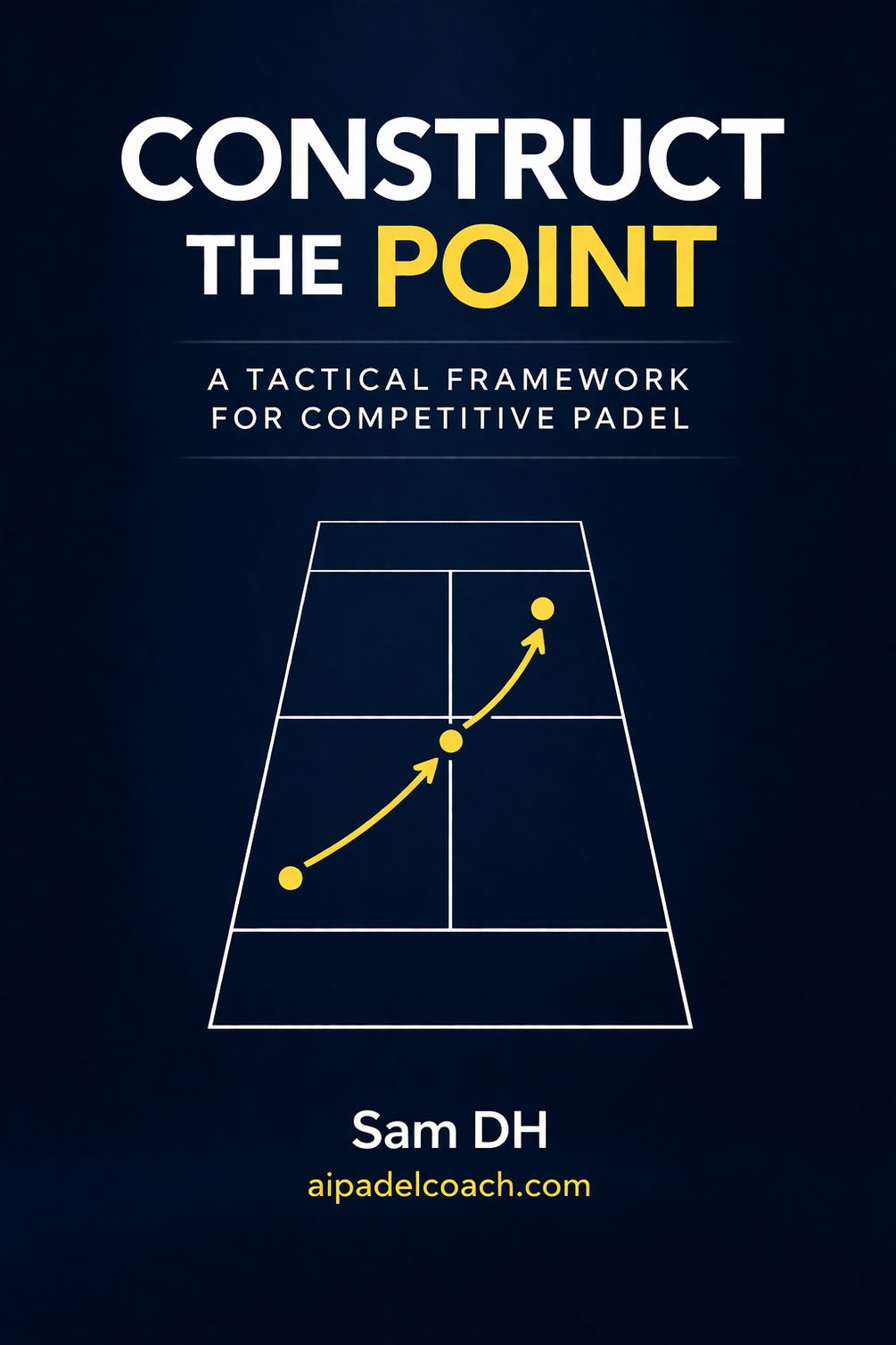
A Tactical Framework for Competitive Padel
Most club players have decent technique. They can rally, they can lob, they can volley. But when the pressure is on, they react. They improvise. They force. They don't construct.
Construct the Point is a tactical framework for competitive padel players who are done playing on instinct and ready to start playing with structure. It's not about hitting better shots — it's about making better decisions before, during, and after every rally, as a team.
The book follows a clear six-phase progression: Serve & Early Structure → Defensive Logic → Controlled Pressure → Conversion → Tactical Adaptation → Execution & Coordination. Written for club players who already have their base technique and are ready to take the next step.
Control first. Destabilize second. Finish last. Adapt always. Execute together.
Get the Book — €14,99Padel addict & software engineer
I'm not a certified coach. I'm a software engineer who got completely hooked on padel and spent a lot of time watching matches, studying tactical analysis videos, and absorbing advice from professional coaches to improve my own game — and it worked. I kept improving, and I started to understand the game at a deeper level.
Most lessons focus on technique — how to hit a bandeja, how to position your feet on a vibora. That matters, but at a certain level everyone can execute the shots. What separates players is decision-making: who makes the right choice in the right situation. An opponent with limited technique but sharp tactical thinking will beat you if you're not making smart decisions. This project is my way of sharing what I've learned and helping other players get better at that side of the game.
Sign up to hear about new features and improvements to AI Padel Coach. Have a question? Drop it in the message field and I'll get back to you.